Richmond and Ray County since 1963
Nothing on this page is sorted by service. It is sorted by the temperature outside.
Furnaces, air conditioning, heat pumps and duct work in Richmond and the towns around it. Read down and the year runs from the worst afternoon in July to the worst night in January, and every job sits at the temperature it actually happens at.
- Shop
- 123 Main St, Richmond
- Weekday diagnostic
- $89, credited to the repair
- At one address since
- 1963
105° to 93° The first ninety five degree day
Almost every call we take in July arrives between two and six in the afternoon.
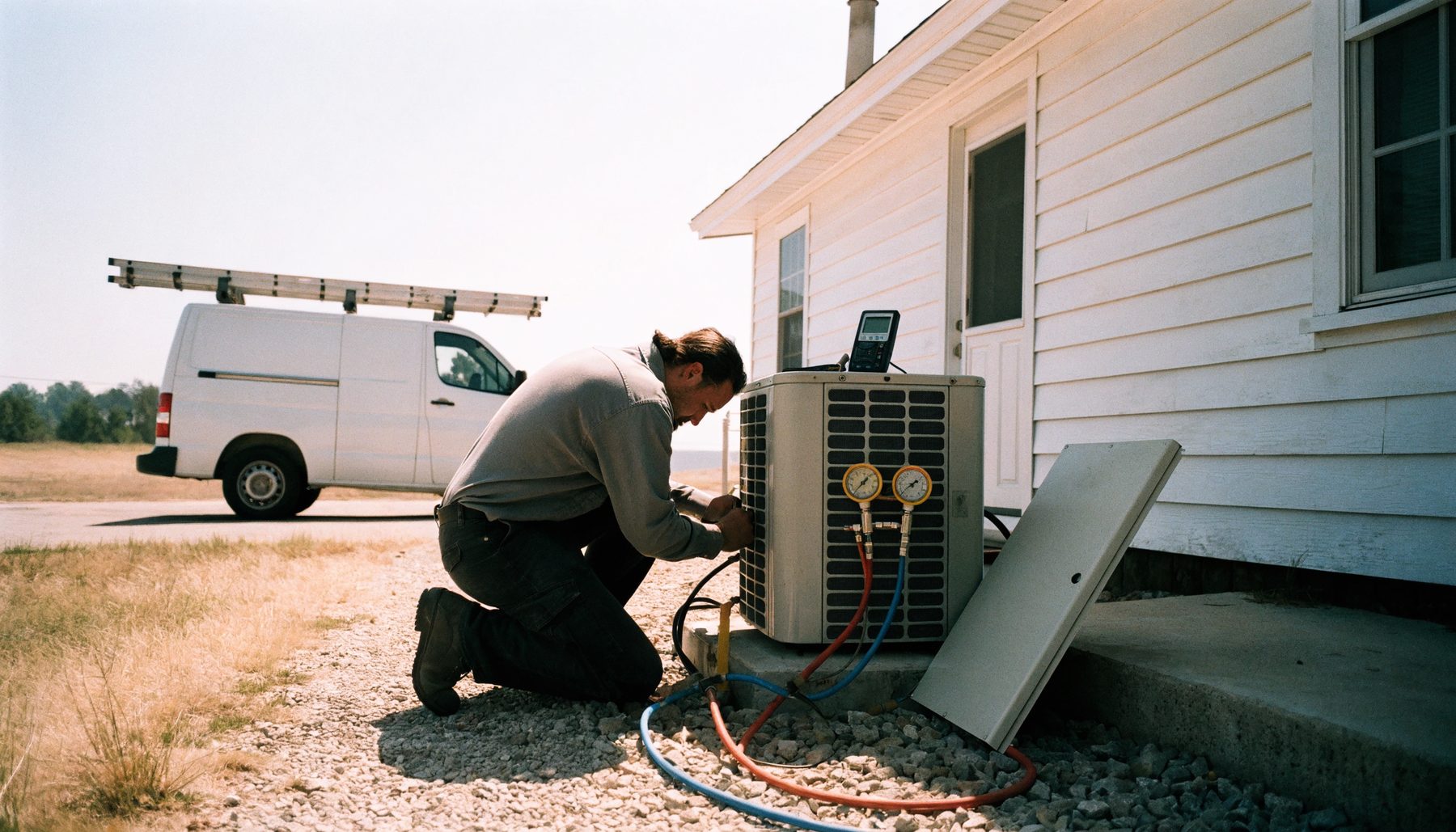
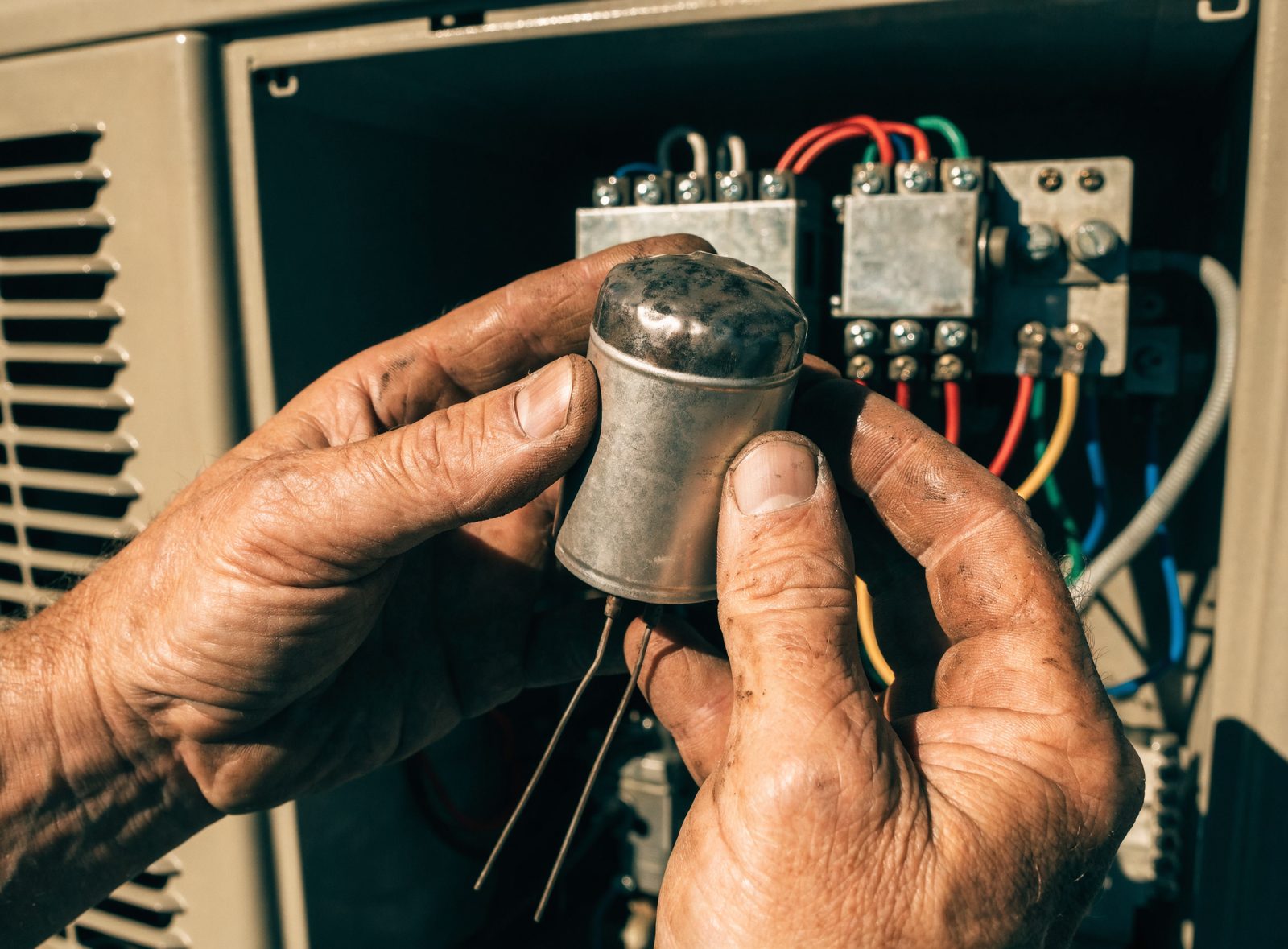
A condenser that ran all winter without complaint gives out on the first genuinely hot afternoon, because that is the first time the compressor is asked to start against a full head of pressure. The parts that fail are cheap, and we will say so on the phone before anyone talks about a new system: a run capacitor with a swollen top, a contactor with burnt points, a condensate drain plugged enough to trip the float switch, a filter nobody has changed since March.
Twenty degrees is what the machine is for
An air conditioner in good order sends air off the coil about twenty degrees cooler than the air going into it. It does not make cold on demand, it removes heat at a fixed rate. So at a hundred degrees outside, a correctly sized system holds a house somewhere near seventy eight and runs almost without stopping to do it. That is the machine working, not the machine failing, and it is the single most common reason we get called out to a system that turns out to be fine.
What is not fine is a house sitting at eighty eight and climbing, ice on the copper, water on the floor at the furnace, or a breaker that will not stay in. Those are worth the call the same day.
| Diagnostic, weekdayFlat fee, and it comes off the bill if we do the repair | $89 |
|---|---|
| Diagnostic, after hoursEvenings, weekends and holidays, waived for plan members | $149 |
| Capacitor or contactor, fittedThe most common summer repair by a wide margin | $180 to $320 |
93° The number the equipment is picked against
Ninety three is roughly the summer design temperature around here, and it is the number a system is supposed to be sized to.
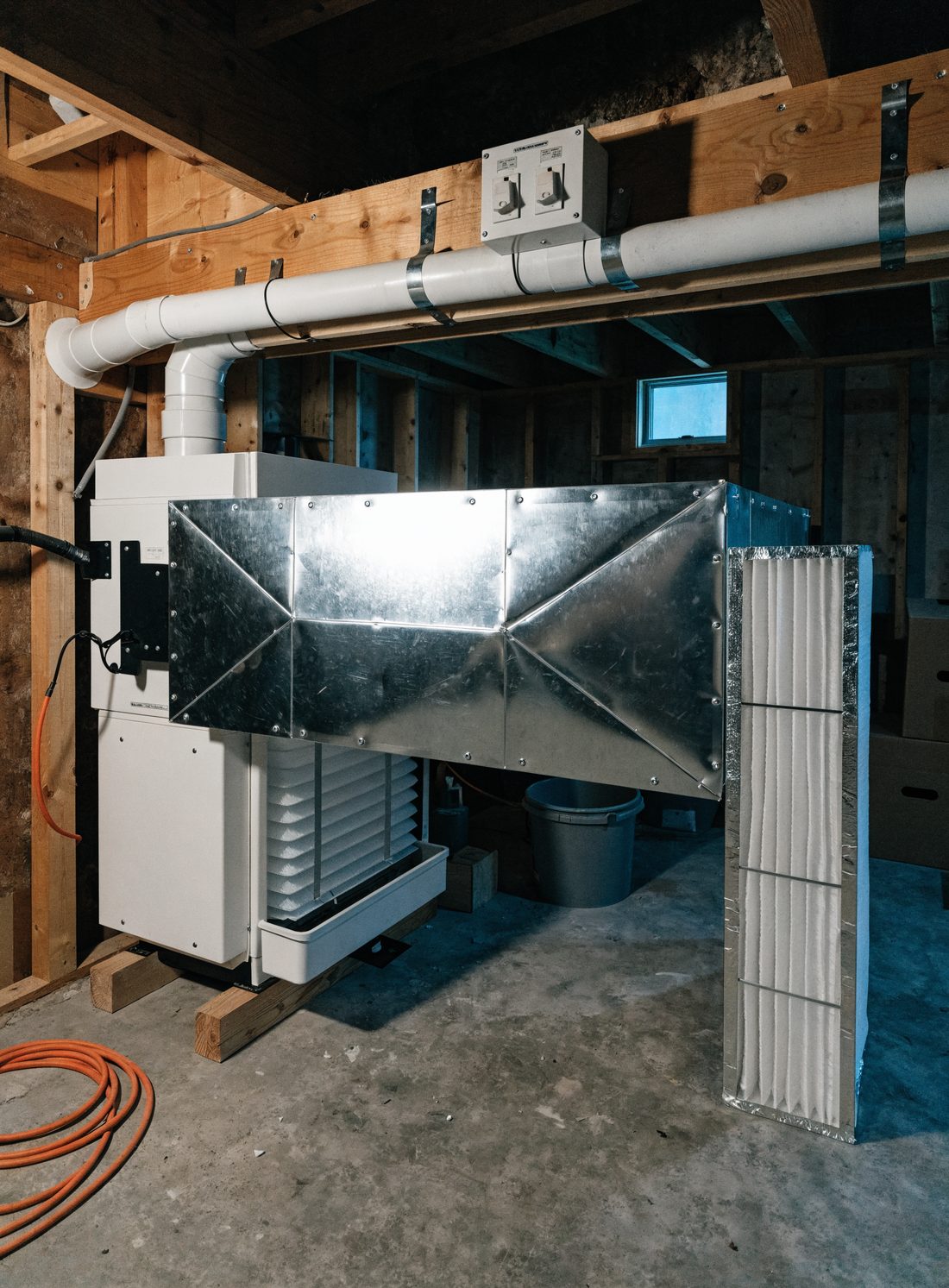
Equipment is meant to be chosen so it just keeps up on the hottest afternoons of an ordinary year, not so it wins an argument with the worst day of the decade. Oversizing is the usual fault and it is not a favour. Too much capacity satisfies the thermostat before it has pulled any water out of the air, so the house ends up cold and clammy, and the compressor short cycles for the next twenty years. That is why we size off a load calculation for your house instead of off whatever was sitting there before.
Repair or replace, worked out on the same piece of paper
This is the conversation people are most afraid of having, so here is where we land on it before you call.
| Age | What failed | What we would say |
|---|---|---|
| Under 8 years | Capacitor, contactor, igniter, flame sensor, drain | Repair it. The part is a fraction of a system and the machine has most of its life in front of it. |
| 8 to 14 years | Blower motor, inducer, control board | Repair is usually still right. Ask what the part costs against what a system costs, and ask it out loud. |
| 8 to 14 years | Compressor, or a leaking evaporator coil | This is the real fork. Get the repair number and the replacement number written down together before deciding anything. |
| Over 15 years | Anything inside the sealed system | Replacement is usually the honest answer, and we will still quote you the repair so you can see both. |
| Any age | Cracked heat exchanger | Not a comfort question. The furnace comes out of service that day. |
| Furnace and air conditionerEquipment, install, permit and haul away, sized off a load calculation | $5,400 to $11,800 |
|---|---|
| Heat pump or dual fuelBalance point worked out on paper before it goes in the thermostat | from $6,900 |
| Replacement quoteAt your house, at the equipment, with a tape measure | No charge |
There is no evening kitchen table presentation and no four hour sales appointment. We measure the house, we write the number down, and we leave. Prices on this page are illustrative for this design preview.
78° to 55° The months nothing is wrong
The room that never gets warm is almost never the furnace.
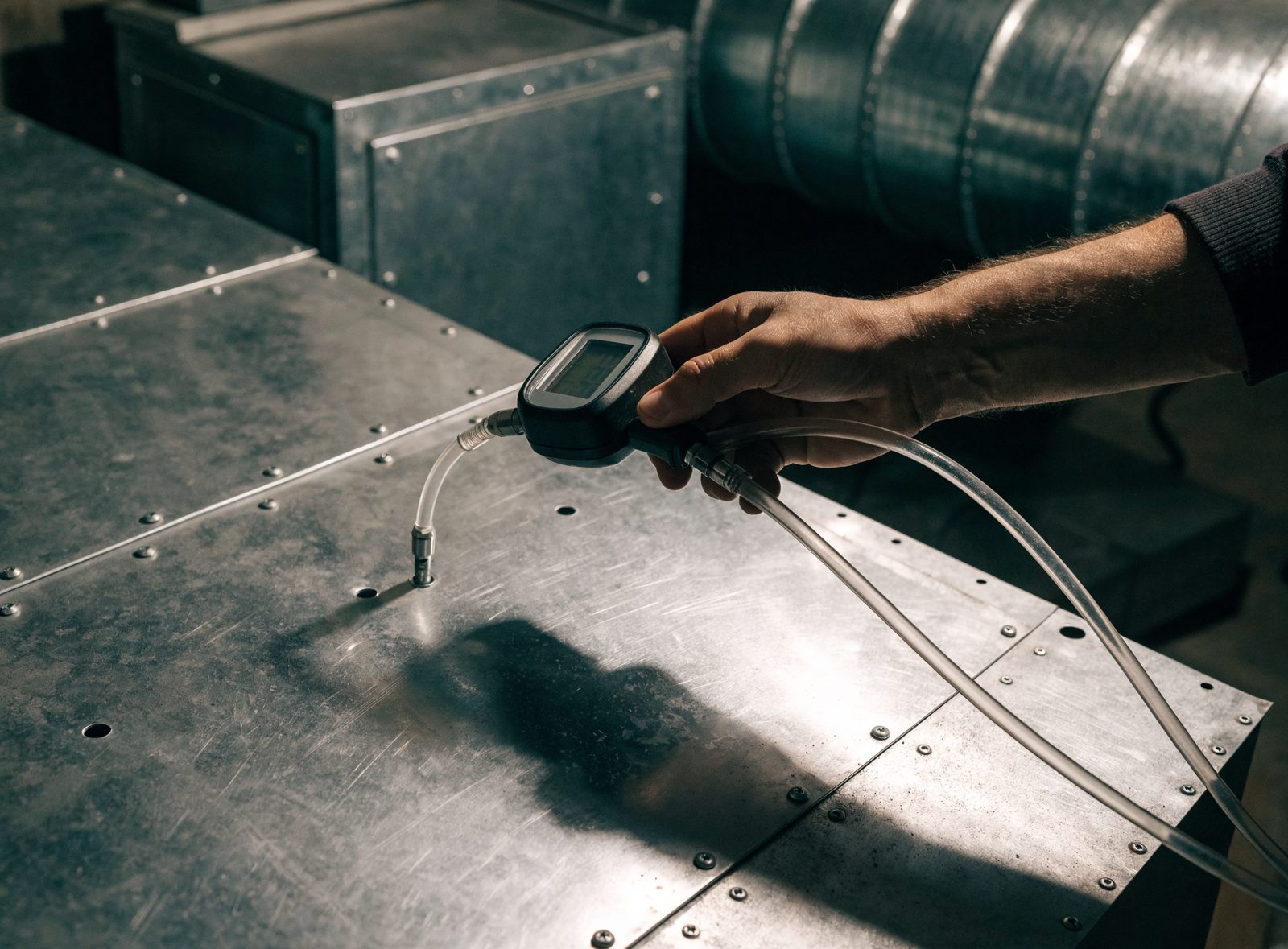
A residential system is designed to move its air against about half an inch of water column. We measure that at the plenum on nearly every call we run, and on older houses in this county the reading comes back at eight or nine tenths. That means the blower is fighting the duct, and every room past the second turn is being starved of air while the equipment in the basement is perfectly healthy.
It is a duct problem with a furnace shaped invoice attached to it, and it is the most common reason somebody has been quoted a system they do not need. Six or seven hundred dollars of sealing and resizing fixes more cold bedrooms than any piece of equipment we sell.
| Static pressure and airflow testTaken on any service call we are already at | No charge |
|---|---|
| Sealing, resizing and added runsMastic on the trunk joints, flex replaced, starved runs opened up | from $650 |
| Maintenance planSpring and fall, cleaning, filters, drain flush, combustion test, first call on a no heat day | $189 a year |
55° to 32° Where the two machines trade places
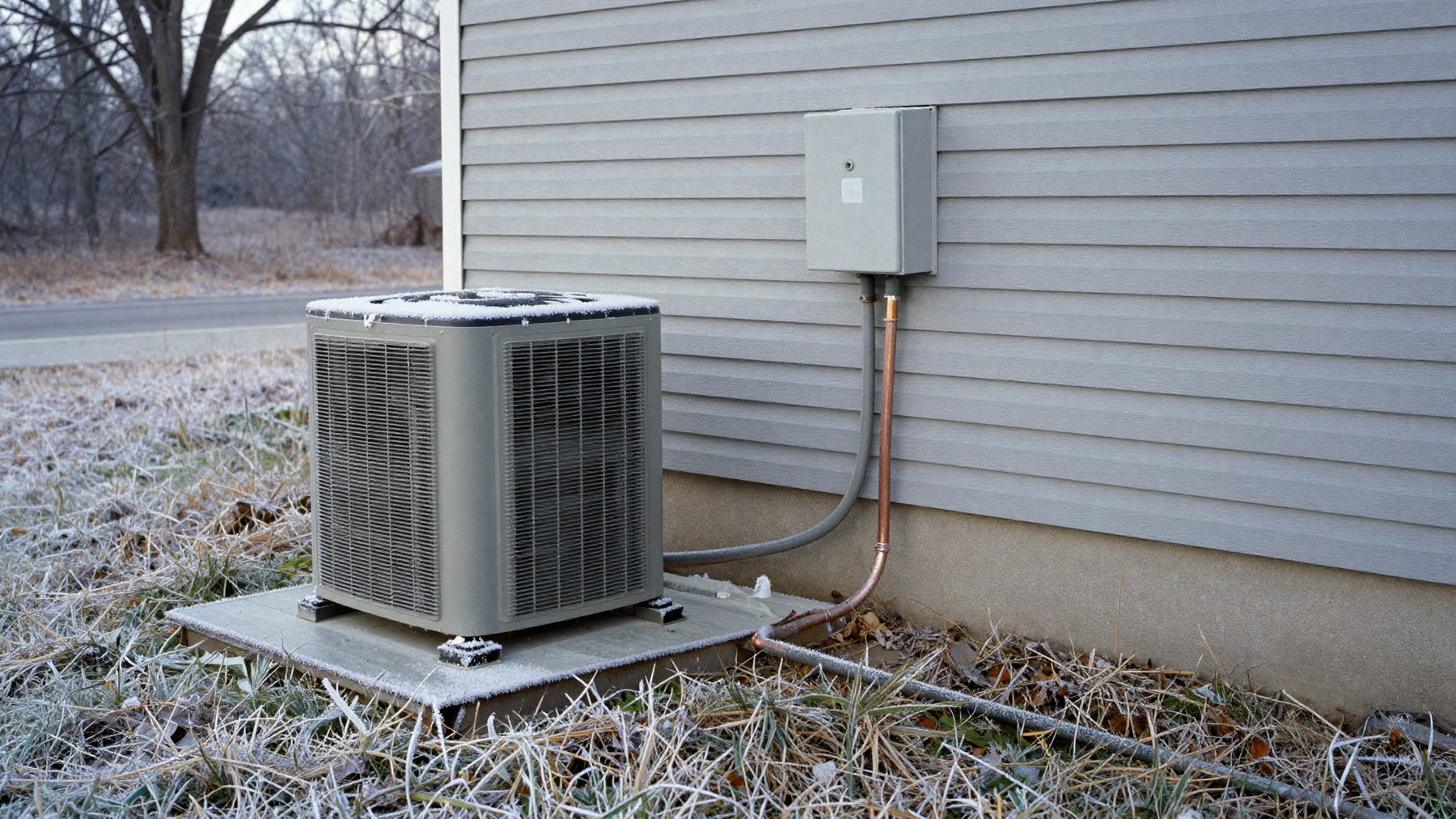
Between fifty five and somewhere below freezing, a heat pump is the cheapest heat you can buy in this county.
A heat pump moves heat instead of making it, which is exactly why it is cheap to run, and it gets steadily less able to do that as the outside air runs out of heat to move. At some point below freezing the gas furnace becomes the cheaper machine. That crossover is the balance point, and it is a number rather than a preference. We work it out for your house and your gas rate on paper, then it goes into the thermostat.
Set it too low and you run a compressor in weather it cannot help you in. Set it too high and you burn gas on a forty degree day for no reason at all. It is a ten minute calculation and it is the whole reason dual fuel is worth doing here.
32° to 5° The cold snap
No heat calls do not spread themselves out over the winter. They arrive in one thirty six hour block.
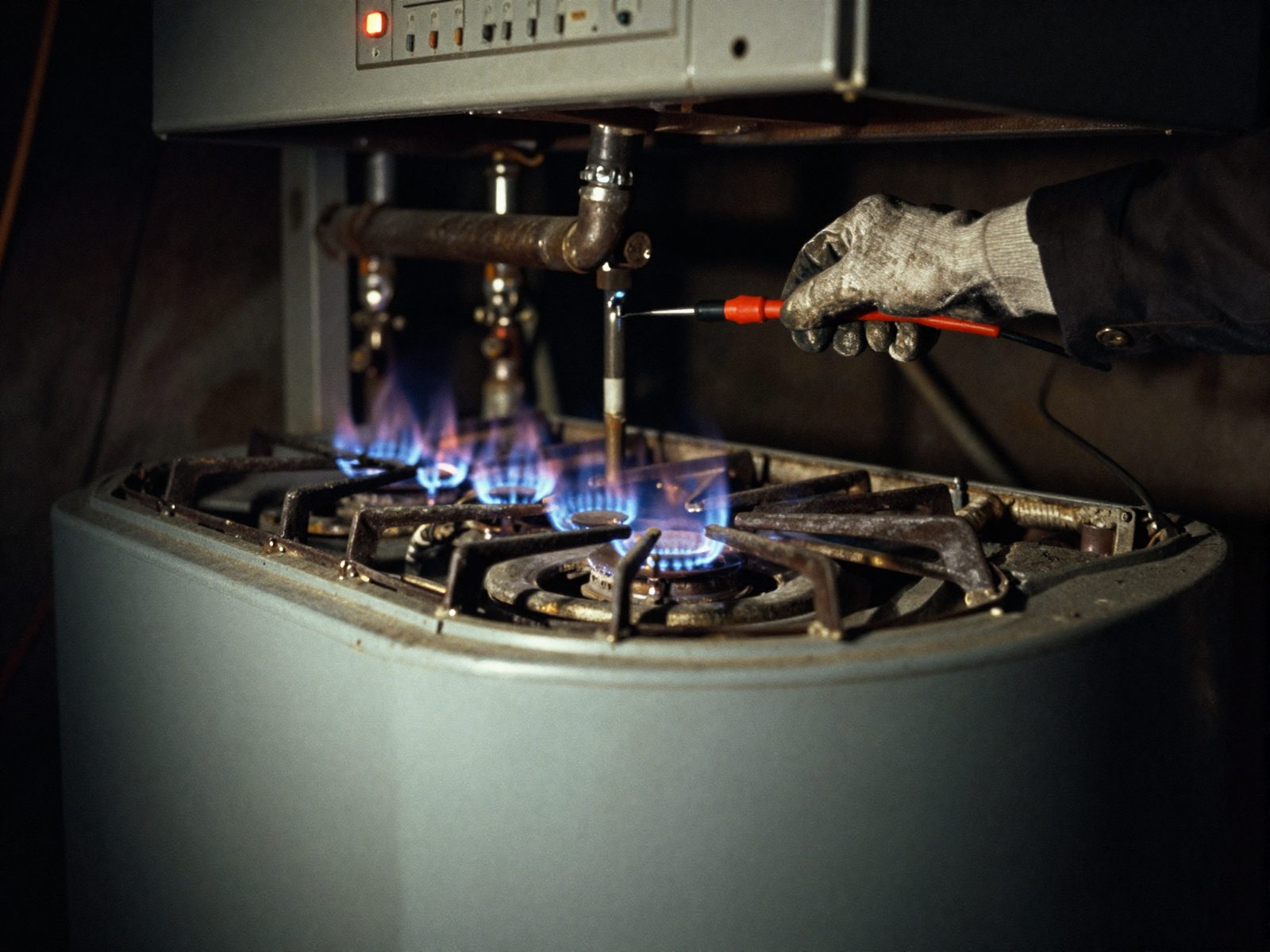
It is always the first night the temperature drops below twenty and stays there. A furnace that has been shutting down and relighting quietly since November finally will not relight. What has usually gone is a hot surface igniter, or a flame sensor carrying enough oxide that the control board can no longer see the flame it is looking straight at. Both are ordinary parts and both ride on the trucks, which is the only reason a thirty six hour block is survivable.
Every heat call includes the combustion test
We put an analyzer in the flue and we check the heat exchanger. A cracked exchanger is the only item anywhere on this page that is not about comfort. If we find one we take the furnace out of service and shut the gas off to it that day, including on the nights when you would very much rather we did not, and including when it costs us the repair we came out to do.
| Igniter or flame sensor, fittedThe most common winter repair | $190 to $340 |
|---|---|
| Diagnostic, after hoursEvenings, weekends and holidays, waived for plan members | $149 |
| Temporary heat while a part is comingLoaned out on a no heat call when we cannot finish that night | No charge |
6° and below The order the list runs in
Six degrees is roughly the winter design temperature here, and on the few nights a year that come near it we tell people what order we are working in.
- First A house with no heat at all and somebody elderly, unwell or an infant in it.
- Second A house with no heat at all.
- Third A house that is heating, badly, and losing ground.
- Fourth Everything else, in the order it came in.
Maintenance plan members get first call within their tier. If you are in the first tier, say so on the phone, because we cannot tell from an address.
What to have ready when you call
- Where
- The address and the nearest cross road, so the truck is not hunting a county road in the dark.
- How bad
- Whether there is any heat at all, or only some.
- The numbers
- What the thermostat reads and what it is set to.
- The behaviour
- Whether the furnace is trying to light and failing, or doing nothing at all.
- Who is home
- Anyone in the house who cannot safely be cold.
We answer our own phone during business hours, which sounds like nothing until you have called the other kind of company.
The shop
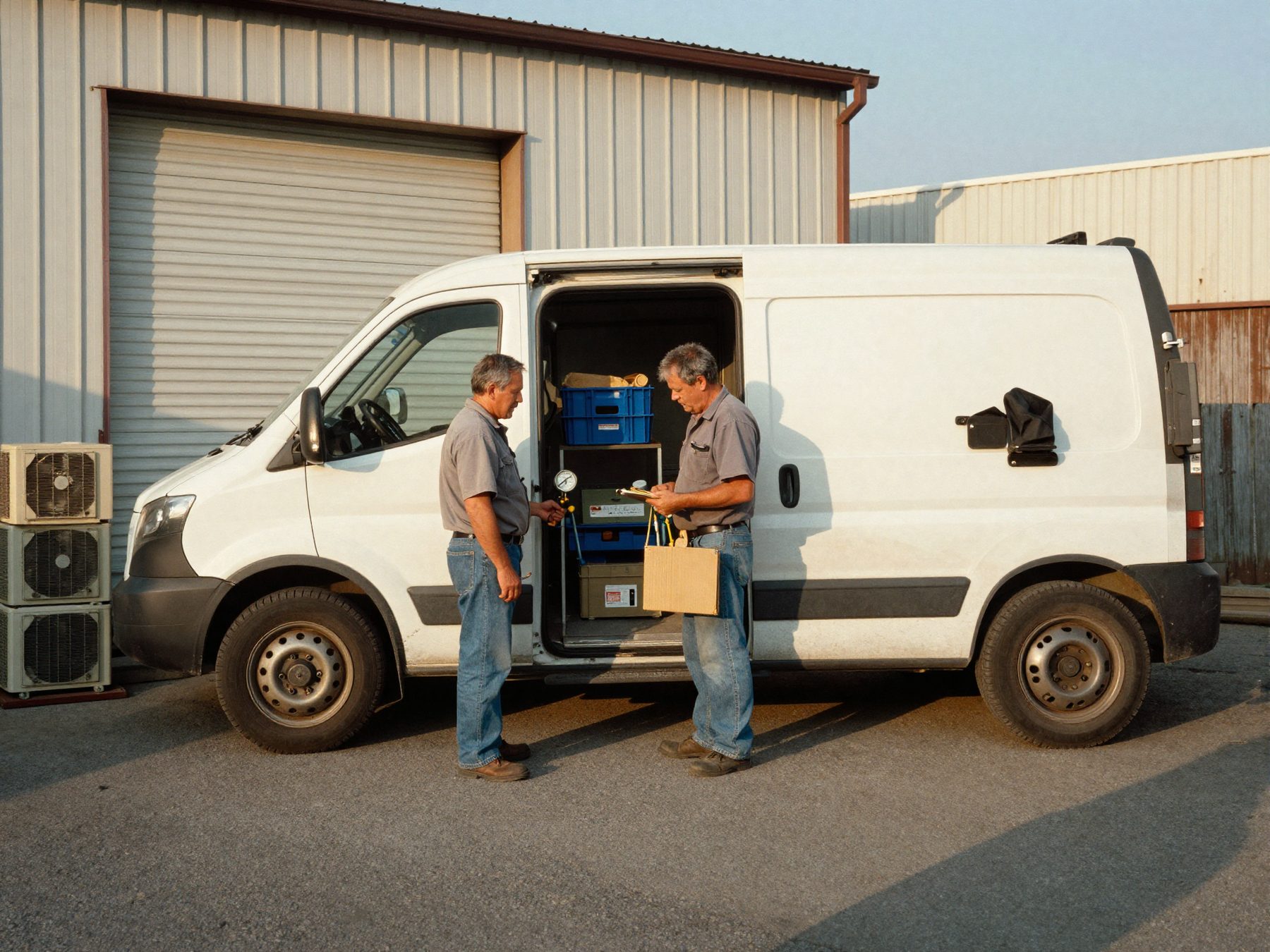
Sixty three years at one address, and it is still a small crew.
The shop opened in 1963 and has not moved since. The two men who run it now met about twenty years ago installing equipment together and have been in the same Ray County basements and crawlspaces ever since. The trucks are stocked with the parts that actually fail, and the person who quotes a job is the person who is on it.
The shop is an office and a parts room and there is nothing to look at. Estimates happen at your house, at the equipment, with a tape measure and a manometer.
Where and when
- Shop
- 123 Main St
Richmond, MO 64085 - Monday to Friday
- 7 to 5
- Saturday
- After hours rate
- Sunday
- Emergency only
- service@example.com
Towns we cover. Richmond, Orrick, Hardin, Henrietta, Lawson, Rayville, Camden, Wood Heights, Excelsior Springs, Lexington, Norborne, and the county roads through Ray, Carroll, Lafayette and eastern Clay County.
However hot or cold it is right now
Licensed and insured. Weekday diagnostic $89, and it comes off the repair.